2020/ STOPPING CLIMATE CHANGE THROUGH DESIGN

About the Project:
This is a very abridged version of a 12-week long deep dive into the minds of Australians to find the spark of climate change activism.
From it emerged a platform intended to give rise to a new generation of ethical consumers.
Project Partner:
Ebony McCue-Shore
(Interface Design, Graphic Design)
Timeframe:
12 weeks
01 / PURPOSE:
The worsening state of the climate and increasingly severe environmental damage are complex problems escalated by a multitude of factors. Some activities such as household waste management, environmentally-conscious purchasing decisions and the support of corporations that seek to shift to sustainable production remain in the hands of independent individuals. However, this is not always the case - a study conducted by CDP Worldwide in 2017, revealed that just 100 companies are responsible for 71% of global carbon emissions (Griffin, 2017). While to most this may seem like an opportunity to shift the blame, we keep in mind that supply is driven by demand. The power to stop climate change lies in the purchasing and lifestyle decisions that consumers make. Traditionally, researchers were under the impression that there was a gap between public and expert perceptions of climate change risk, but the growing rates of awareness indicate that this gap may be decreasing.
While the overarching problem the team is tasked with tackling remains the population’s broad contribution to fighting climate change, the explicit focus of this project persists on the bottom line of the process: individual action. Instead of targeting particular behaviour, the team seeks to provide the audience with the knowledge and incentive they need to take the initiative and build their journey towards a more sustainable future.
02 / PROCESS:
The team undertook the project in a semi-structured, iterative format, with developmental and testing
methodologies being implemented with data informing the subsequent collection. The evaluation and development
process embraced the agile methodology, using a combination of Scrum and Kanban techniques.
Click on the segments to jump to the corresponding sections:

02.1 / DISCOVER:

Intention: To gain a thorough understanding of the problem space, by studying the scientific consensus around the present state of the issue, perceptions and attitudes of our target population and the competitive landscape our solution will be operating in.
The team began engaging in the topic of misinformation within climate change by analysing a wide range of scholarly articles, which gave the team access to existing schools of thought around climate change mitigation efforts. With large corporations to blame for most carbon emissions, the most accessible and appropriate was the tactic of creating demand for ecological reform through the bottom line - consumers.
This sub-phase provided the team with early insight into the problem space, inclusive of the audience's current perception of the issue. Specifically, it revealed two key themes that affect the way any future solution is received, allowing the team to form a preliminary set of design considerations. These themes speak of the lack of direct, first-person experience with climate change within our audience, as well as overexposure to negative and distressing media coverage. These themes manifest in a general disengagement in the topic and desensitisation to the severity of the issue within our audience. As a result of these observations, the team was able to shift their research focus to a closer study of approaches that function well in such a space. This was done by identifying solutions and similar products that exist in the problem area. The synthesis of this data provided a representation of the stakeholder landscape and allowed for easy identification of market gaps, as well as providing a succinct overview of existing efforts. Specifically, it revealed a promising market gap as no current solution attempts to provide educational material in an engaging and interactive manner appropriate for the entire general population.

Intention: To ensure the applicability of the secondary research outcomes to our current audience, as well as to fill knowledge gaps, a round of primary research was conducted. Aside from verifying the takeaways of the literature review the team aimed to clarify the current barriers which impede people in changing their behaviour in contribution to the fight against climate change.
The enquiry contributed to the triangulation of the current state of our target segment with existing research into the problem area, while also gathering richer insights into more nuanced areas of interest. Each method was selected to cover both behavioural and attitudinal dimensions of research, as well as to gather quantitative and qualitative data.
To first narrow down the characteristics of our target audience, the team examined the extreme end of the spectrum - climate change denial activists. To observe and document the spaces in which common arguments against climate change are perpetuated, an online ethnography was conducted, as it was identified as the fastest and easiest method of observing such spaces.
The resulting 30 extracts painted a clear picture of the context in which discussions on climate change denial take place and the arguments that are used in opposition to the scientific consensus. Specifically, data corroborated earlier secondary research findings, but further analysis culminated in a worrying discovery. The members who partake in discussions in such spaces lack the willingness and malleability of opinion to be convinced otherwise. This segment was identified as an unviable target, and the team recognised that targeting such extremist groups is outside the scope of this project.
Secondly, to validate the initial findings from secondary research, an online survey was conducted. A total of 55 respondents completed the survey, which was distributed to the target audience through social media. The key takeaways from the surveys can be broken into 3 areas of concern:
-
Media scepticism: There is still a fundamental lack of trust in public and private information channels, coupled with overexposure to the extreme portrayal of climate change;
-
Lack of accountability: The disconnect leads individuals to feel isolated and minute in the climate change mitigation efforts and stagnates their desire to help;
-
Low understanding of ethical consumerism: Despite being one of the easiest actionable goals in eco-efforts, there is an observed gap between beliefs and behaviour.
Following this, a set of interviews was run, in which 6 participants from New South Wales were selected for an online appointment via Zoom conferencing software. To avoid the social desirability bias associated with discussions on climate change, unlock deeper beliefs and increase participant engagement, the interview process was evolved into a fiction writing session. The participants were provided with a prompt, and a set of questions to facilitate world-building. This process allowed them to verbalise their understanding of the climate change crisis, magnified through the lens of speculative fiction. They were asked to describe two extreme futures - a positive (utopia), and a negative (dystopia). This resulting transcript was used to extract participants fears, feelings, thoughts and motivations in relation to the future with and without climate change. A thematic analysis was performed on the transcripts:

The resulting themes were used to establish 3 clear audience sentiments in response to which the solution will be developed:


02.2 / DEFINE:
Intention: To use ideation techniques to generate a unique range of concepts and conducting early concept screening by comparing them against our identified needs and pitching them to a sample audience.
To facilitate rapid concept generation, brainstorming sprints were used, in which a list of stakeholders, possible tasks and technologies that fit within our brief were shuffled to randomly generate “How might we…” statements. This activity generated 20 high-level concepts, which were then internally evaluated by the team. Each concept was pitched to the team, and potential strengths, weaknesses and feasibility issues were discussed. Through this framework, the concept range was narrowed down to 6 refined solutions.
To objectively evaluate our concepts against the design brief and general feasibility criteria, a Pugh Matrix was constructed. (Appendix 2.2.1.3.1) Each criterion was given a weighting of 1-3X, to ensure that significant criteria were amplified, and the final score reflected a more accurate valuation of the concept. This process helped the team discard two more concepts, retaining some successful features to be fused with the remaining four.
As a result of this sub-phase, the team gathered 3 concepts that scored soundly against the established design criteria and received positive feedback from the target audience. With the refined concept descriptions prepared, the team was ready to begin developing and prototyping each concept.

Intention: To use ideation techniques to generate a unique range of concepts and conducting early concept screening by comparing them against our identified needs and pitching them to a sample audience.
In this round, we focused on elaborating on the remaining 3 concepts. Using concept sketches as a basic paper prototype, rapid concept testing took place. The testing was largely conducted under the think-aloud protocol, guided by a set of abstract tasks. One more concept was eliminated due to the lack of user engagement and feasibility concerns.
This sub-phase facilitated the development of the concepts into early-stage tangible prototypes. Preliminary design considerations, information architecture and screen layout were formed and feature scopes were determined. The resulting product was ready for user testing, giving the team the capability to test both the functional and experiential success of each solution


02.3 / DEVELOP:
Intention: The team aimed to gather usability data cheaply and quickly in the early stages of the prototyping process. The key focus of this round was to develop a prototype to a mid fidelity standard and simultaneously weed out all navigational, structural and usability problems.
Based on the wireflows, paper prototypes were created to gather usability data cheaply and quickly on the remaining 3 concepts. Using the established testing protocol, the team quickly gathered data on the effectiveness of the navigational flows, and the intuitivity of the information architecture, which fed into the first iteration of the prototypes.
This testing round served as a “validation stage”, to verify the team’s progress and confirm the applicability of the solutions to the research outcomes. The resulting feedback lead to the elimination of Concept 1 due to several conceptual weaknesses in comparison to the other two concepts. With little changes needed this round, the team felt confident in proceeding to the next level of fidelity - digital wireframing. Internal workshops were used to convert each prototype into digital wireframes. This was a crucial step in the development of all solutions as it helped eliminate the cognitive load required for usability testers to process the transitions between screens in a paper prototype, allowing the team to get a better picture of the true cognitive load caused by navigational flows and information architecture.

Using the new wireframe structure, the initial digital prototype was created and tested with expert users as they are far more sensitive to broken conventions, inconsistencies and features which are likely to cause user error. This, in turn, resulted in the selection of the final concept, based on exceptionally positive reception across multiple rounds of testing.

Intention: Confirmation of success of the final design in both functionality, usability, experience and overall success
Heuristic Evaluation Round 1
Intention: Refine the interface, create a prototype representative of the final product.
Method: Digital Prototypes: High Fidelity, Usability testing on General audience: Abstracts Tasks, Think Aloud, Feedback Matrix
Analysis: Affinity Diagram translated into a Prioritisation Matrix, Heuristic Evaluation
To test the usability of our mid-fidelity prototypes, we followed our existing protocol with a few amendments. This round was implemented to objectively reaffirm that the latest changes were successful and the usability problems identified in the previous round were solved.
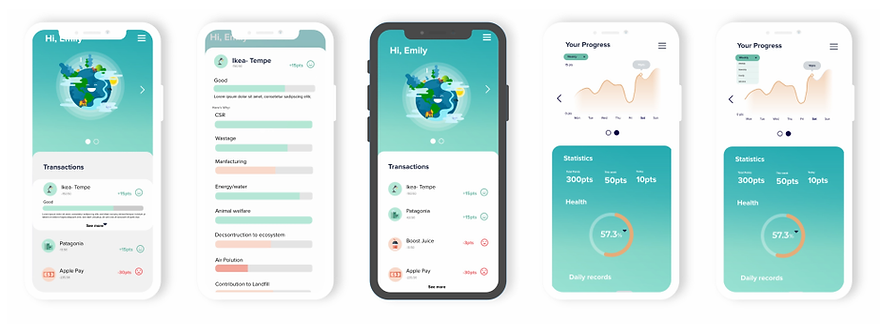
To analyse the collected data the team chose to use affinity mapping to quickly synthesise the feedback Into clusters and identify key areas of concern. Using this method allowed the team to traverse large amounts of data quickly and categorise necessary changes to streamline the iteration process


Heuristic Evaluation Round 2
Intention: Ensure the latest changes has addressed the problems identified in the previous round.
Method: Digital Prototypes: High Fidelity, Usability testing on General audience: Abstracts Tasks, Think Aloud, Feedback Matrix
Analysis: Affinity Diagram translated into a Prioritisation Matrix, Heuristic Evaluation
Upon implementing the changes from the previous round, we conducted a second set of testing to reaffirm the correctness of the interface before translating the mid-fidelity prototype into a Wizard-Of-Oz web app.


02.4 / DELIVER:
Final Prototype Functionality:


Future Work:


Launch Timeline:
